The big fat study that didn't pan out

Interesting the reaction to the 8-year, federally-funded study comparing women on low-fat diets with a control population of women eating “normal” diets. The disappointment is palpable: study results, reported in the Journal of the American Medical Association yesterday, didn’t meet expectations! The low-fat dieters didn’t have any lower incidence than the control population did of breast cancer, colon cancer, or cardiovascular problems including heart attacks & strokes!

From what I’ve read, there were some problems with study design: no distinguishing, for example, between good vs. bad fats (their definition), a study period that was may be too short for the conditions studied, the diet cheating by some of the low-fat group. But what really stands out for me is how obvious it is that researchers, as well as critics of the study, have preconceived biases about what the results of the study were supposed to be — biases that fly in the face of what numerous people, women & men both, have experienced as a result of going on low fat diets, especially low fat/high carbohydrate diets.

I think I agree with Dr. Diana Schwarzbein, who wrote:

…I conducted a thorough search of the medical literature and discovered that there was not a single long-term study that proved that a low-fat, high-carbohydrate diet was beneficial to our health. However, I did find thirty years’ worth of basic science studies that proved that high insulin levels were linked to heart disease, high blood pressure, excessive increase in body fat, and many other problems. This is when I concluded that the population studies were not as important in determining how to be healthy as basic science was. Population studies take a segment of the population, follow it for a few years, and try to come up with conclusions. The variability involved in population studies makes this an almost impossible task. On the contrary, basic science is the study of how the body actually works in physiological terms. Basic science does not change greatly. However, every time you turn around the population studies are telling you how to eat differently. If we just stick to science everyone would stay on a balanced eating program consisting of healthy, nutritious foods. (“We must reverse the common thinking that a low-fat, high-carbohydrate diet is the key to health and weight loss,” n.d.)

Okay, so I’m a Schwarzbein cheerleader now. But it’s the only thing that makes sense. I’m not a scientist or any kind of doctor, but I’m not stupid. It’s not dietary fats that cause the problems, because dietary fats are necessary for making new hormones, neurotransmitters, cell walls, & other substances & structures needed inside our body. What causes the problems are styles of eating that cause improper build-ups of body fat: excess storage fats, triglycerides in the blood, & high LDL/low HDL in the blood. Those aren’t cause by eating dietary fats (or at least not the good ones), but by eating & living in unbalanced ways, including eating too many carbohydrates, refined foods, etc.

And if the scientists would back away from their biases, maybe they’d notice that the results of this study can be interpreted this way.

Posted in Fat loss | Tagged , , , , | Comments Off on The big fat study that didn't pan out

Dinner then & now

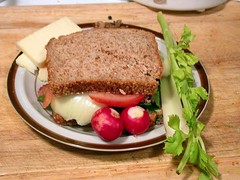
You can’t really see the bison, but it sure tasted good — a bison roast that my partner cooked last night. The bread is organic no-flour sprouted grain Ezekiel bread, & there’s lots of good veggies here too: a collard leaf, onion, & tomato in the sandwich, with radishes & celery to the side. The white stuff in the back is raw milk cheddar. A good, low glycemic index meal, also in line with what I should be eating for a meal nowadays for my metabolic status of “insulin resistant with healthy adrenal glands,” per The Schwarzbein Principle II: the Transition. (Other than that Schwarzbein nixes any man-made products like bread.)

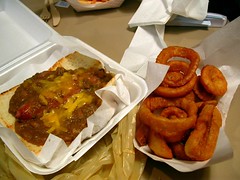
By way of comparison, here’s what I ate for dinner the night before my mother’s death of diabetes-related complications two months & a half ago.

Health results so far: edema in feet & on back of my neck has gone way way down. I no longer suffer from heartburn/acid stomach or middle-of-the-night acid reflux. I feel better. I’ve lost weight, about 9 pounds. (I anticipate losing at a slower weight now that I’ve modified my program per Schwarzbein’s recommendations, but that’s okay: health first, weight afterwards.) My fasting & postprandial blood glucose isn’t yet where I want it to be, but it’s improving slowly, & I’m very confident that I will be able to restore myself to insulin sensitivity & metabolic & overall health.

Posted in Nutrition | Tagged , | Comments Off on Dinner then & now

I'll still be dancing

I love the dancing I’ve been doing every morning as exercise. Really love it. Just pop the earphones to my iPod onto my ears, start up one of the half-hour dance playlists I’ve set up, & dance. Fast enough to get a good aerobic workout, even to break a sweat before that half hour is up.

But I’m modifying my exercise plan now, & won’t be dancing quite as much for the time being. This email is to explain why, in hopes this explanation might benefit other people too. I am writing as an overweight person with insulin resistance (prediabetic) whose objectives include losing fat weight in order to restore insulin sensitivity & prevent myself from becoming diabetic. But this advice might also apply to anyone who is trying to lose weight & restore overall metabolic health. (Including diabetics.)

I had begun to follow the program described by Tom Venuto in his e-book Burn the Fat, Feed the Muscle. The philosophy of this program is in its title: rather than “starving” the fat through low calorie diets — which tends to result in the loss also of lean body mass (muscle & bone) — Venuto advocates burning the fat off through aerobic exercise (also called “cardio”); & also, through weightlifting or other strength-building/resistance exercise, building up muscle, which speeds the metabolism for faster fat-burning. The BFFM program depends on four fundamental components: proper goal-setting & motivation; proper nutrition which fosters fat loss & muscle building; aerobic exercise for fat-burning; weight training for muscle-building.

Having read a lot this past month & a half about insulin resistance, prediabetes, & diabetes, I already knew that one of my best routes to prevent myself from getting diabetes & to restore myself to insulin resistance was to lose weight & to build muscle. I knew also that rapid weight-loss through crash or fad diets was unhealthy weight loss. Everything Venuto said agreed with & expanded upon this knowledge. Except for my sense now that the ratio of 50% carbs to 30% proteins to 20% good fats in the BBFM program is too heavy on the carbs & too light on the fats, I still agree with this program all the way.

But I made one mistake in my thinking about the order in which I should take things, & that amounted to doing too much aerobic exercise for my current metabolic status of insulin resistant. Instead of trying to burn off the fat first through aerobic exercise, in order to regain insulin sensitivity & metabolic health, per Diana Schwarzbein’s second book, The Schwarzbein Principle II: The Transition I should first build up muscle through strength-building/resistance exercise in order to regain insulin sensitivity & metabolic health, & only then train more heavily with aerobic exercise to burn off the fat stores. As Schwarzbein says, “You need to be healthy to lose weight, not lose weight to be healthy” (p. 183). Rather than “lose weight & build muscle,” the order needs to be “build muscle, then lose weight.”

Venuto’s advice comes from a substantial practical background as a personal trainer & natural bodybuilder (one who has never used steroids or drugs for muscle-building or weight loss) who has helped who knows how many people lose weight & build muscle in healthy ways. Schwarzbein’s comes from a substantial practical background as a physician specializing in metabolic healing & endocrinology who has helped who knows how many people restore hormonal balance & metabolic health & to lose unhealthy weight.

Schwarzbein explains that people who are insulin resistant should beware of overexercising, particularly with aerobic exercise, because too much aerobic exercise at this point can actually prolong or even increase insulin resistance. The reason for this is that there comes a point in an aerobic exercise session that your levels of the stress hormones adrenaline & cortisol begin to rise. They do this as part of the body’s natural response to stress in order to provide your body with the needed energy to deal with a stress situation (fight or flight). Amongst other things, they lead to a breakdown of glycogen (human carbohydrate stores) in the liver & muscles into glucose, leading to a rise in blood glucose. They also lead to the breakdown of other structural and functional biochemicals — fats including body fat, proteins including muscles — in order to deal with the stress.

(As an aside, adrenaline & cortisol also will rise in response to stresses like skipping meals, not getting enough sleep, fasting or going on low calorie diets, not eating enough carbohydrates to meet the body’s daily energy needs, using stimulants like too much caffeine or certain drugs like Ritalin, Dexedrine, etc.)

When adrenaline & cortisol levels go up, so do insulin levels, in order to keep you from completely using up your structural & functional biochemicals & to help you rebuild them again. And since an insulin resistant person like me already has too much insulin floating around in my blood because of my chronic high glucose levels, this further whacks out my metabolism.

The rising of adrenaline, cortisol, & insulin levels this way would be completely fine okay if I was metabolically healthy. They would just be doing what they were designed to do in a balanced, healthy way. But when they do what they’re designed to do with a metabolically unhealthy person, they go beyond the design’s intent & put me on even worse ground.

Therefore, instead of doing the majority of my exercise training right now in the area of aerobic exercise, the best thing for me to do right now is to focus more on (anaerobic) resistance/strength-training. This will build up lean muscle mass. Since muscle weighs more than fat, I might even gain weight. But, I will also burn calories while training; increase my metabolic rate after a training session, which increases the speed with which body fat is burned even when I’m at rest; & as muscle is built, increase my metabolic rate overall — the more muscle in a body, the more calories that body burns even when asleep. More importantly to my health, I will also increase the number of insulin receptors in my body, & hence the places that insulin can attach to in order to usher blood glucose into my body cells. In other words, I’ll be increasing my insulin sensitivity. And once I’m back to being insulin sensitive, I’ll then be able to burn all my excess fat stores more efficiently & safely & in a healthy, metabolically balanced way.

In support of this program, eating more protein than I had been previously will provide the raw materials needed in building muscle. As I understand it, dietary fats are the raw materials for making hormones, neurotransmitters, cell walls, & other important structures, so I’m also eating more healthy fats (not man-made or otherwise damaged).

As for carbohydrates, I am about halving my previous consumption, from approximately 210 grams/day to 100 grams per day, in order to lower my blood glucose levels so that I’m not excreting more insulin than I need to.

Why am I not just cutting out carbs altogether, so I stop having this blood glucose & insulin problem?

Partly because of what Schwarzbein the endocrinologist says. First, my adrenal glands will excrete more adrenaline & cortisol if I don’t eat enough carbs, because they regard “low carbs” as a stress. Adrenaline & cortisol are “breaking down” hormones: if they can’t find enough glycogen (human carbohydrate stores in liver & muscles) to make up the energy I need to function — which might well happen if I’m not eating enough
carbs to even build glycogen stores to begin with — they will break down not just body fat but also lean muscle & bone structures in order to make up the difference in my energy needs. Second, as previously mentioned, my pancreas will respond to high adrenaline/cortison levels by excreting more insulin, which is exactly something I don’t want to have happen as an insulin resistant person.

Add into what Venuto the bodybuilder & persona training says. First, nsulin, the “builder” hormone, is needed to usher the amino acids from ingested protein into the muscle cells. And it can’t do this very well without a boost from carbs! In Venuto’s words, “To get the protein (amino acids) into the muscle cells efficiently requires insulin. Insulin is secreted most readily in response to eating carbohydrates. Therefore, a moderate (but not over-sized) portion of carbohydrate should be eaten with your protein to facilitate the uptake of the amino acids into the muscle cell” (Burn the Fat, Feed the Muscle, p. 141). Also, “When fat is high and carbohydrates are very low, there’s nothing to stimulate a moderate insulin release. Fat has very little effect on insulin. In order to drive the amino acids into the muscle cells where they can be used for muscle growth, a moderate release of insulin is necessary, and only carbohydrates produce enough insulin release to shuttle those amino acids into your muscle cells. It’s ironic, but so-called ‘anabolic’ high fat diets are anything but muscle promoting” (p. 163).

Second, enough carbohydrate in the system gives you better energy to even lift the weights (or otherwise do resistance training exercise). Weightlifters all know that your workout sucks if you don’t have enough carbs. Bad workout: very little muscle-building.

Third, sufficient carbohydrate ensures that the energy you’ll be burning up isn’t from your own protein (muscle). “When glycogen stores are severely depleted through dietary restriction, your body can also burn protein for energy, converting muscle tissue into glucose through a process called gluconeogenesis. Carbohydrates have a protein-sparing effect – they help ensure that you don’t burn up muscle for energy. (Unfortunately, if your carbohydrates are too high, they also have a fat-sparing effect because when carbohydrates are plentiful, you tend to burn more carbohydrate for energy). Advocates of ketogenic and very low carbohydrate diets claim that the very nature of the ketogenic diet prevents muscle loss. In the real world, I have never observed this even once! Extremely strict very low carbohydrate diets invariably cause muscle to be lost along with the fat” (p. 211).

So, not too much carbohydrate, not too little; not too much insulin, not too little. Insulin secretion & carbohydrates in the right amounts are necessary for me to build muscle efficiently, so that I can even hope to restore myself to insulin sensitivity & health.

And for exercise, aerobic exercise isn’t eradicated — just its ratio in proportion to resistance/strength-training has changed.

I won’t be dancing quite as much right now — but I’ll still be dancing.

Posted in Fitness, Insulin resistance | Tagged , , , , , | Comments Off on I'll still be dancing

Septic tank

“Septic tank” is, according to an Australian friend of mine, Aussie rhyming slang for “Yank.”

E.g., Fuck off, septic tank, the near-to-last words to me of another Australian friend — or rather, I guess, ex-friend, as she made it clear in her message last week that she, a “decent person,” wants nothing further to do with me. The rest of her message was rife with unfounded accusations based on her radical & paranoid misinterpretion of private emails of yet another Australian friend that this “decent person” took it upon herself to read without permission.

Well, at least a septic tank breaks down the waste, recycles & purifies & returns it to the cycles of life.

Which is just about all I can do with the load of crap this “decent person” unloaded on me.

Posted in Itse | Comments Off on Septic tank

Eating to heal insulin resistance

You can now add to the library of how I’m putting together my own program:

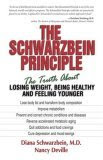
The Schwarzbein Principle: The Truth About Losing Weight, Being Healthy, and Feeling Younger by Diana Schwarzbein, M.D. and Nancy Deville. This book is very much packed full of information — the actual physiology of nutrition, as well as numerous examples from Schwarzbein’s clinical practice. Overnight this book has changed my mind about a lot of things that I previously believed about food, particularly about how many carbohydrates I should eat, & how many fats & what kind. I no longer believe in “low fat.” Or even, for that matter, in “low saturated fats.” My definition of what bad fats are has changed: hydrogenated, human-manufactured, trans-fats, damaged fats. I will be no doubt writing more about fats & other stuff I’ve learned from this book in other posts. Take what you like & leave the rest.

The result of this book is not that my previous program has been overturned, but rather it’s been modified. Primarily: much lower carbohydrate intake, in line with my current body composition & activity level. I am no longer going to worry at all about eating “too much” fat or “too much” protein — just whether they’re good or bad.

Schwarzbein believes — & has the knowledge of physiology & endocrinology to back it up, plus clinical experience with actually helping patients — that hormonal imbalances, & in particular imbalances of insulin, are behind most of the degenerative diseases that are afflicting us. Not just Type 2 diabetes, but also heart disease, cancer, osteoporosis, etc. etc. etc. And that the imbalances of insulin are due chiefly to the ideology (my word, not hers) of “low fat/high carbs” that has dominated the diet industry & popular media at least in the U.S. since around 1980. (At least until it started becoming dominated by “low carb/high protein” diets.) Much like the low carb/high protein people (as I understand it), Schwarzbein says that fats have been wrongly maligned & that the emphasis on high carbs over the past 20-25 years is one of the chief causes of the current epidemic of obesity & degenerative diseases, because it’s low fat/high carb more than anything that has led to imbalances in insulin in the body.

Basically, Schwarzbein says: eat however much healthy fats & proteins as you want; as for carbs, don’t go down too or ultra-low, but only eat as many carbs as is consonant with your metabolic activity, because if you eat more carbs than you actually need for your energy requirements it will translate into fat.

For my current body composition, which I deem to be “overweight with excessive ‘insulin-meter'” (i.e., fat around mid-section), & my current level of activity, which I deem to be “somewhat active” (moderately active with a total of approx. 2 to 4 hours of exercise a week… though it is beginning to increase), that translates as having no more than about 15 grams of carbs per meal or snack, counting 3 meals & 2 snacks. Or in my case on most days, five 300-or-so calorie meals.

Okay, now to what happened to me this morning. I was about halfway through the Schwarzbein book when I ate breakfast. Because it’s a Sunday, I didn’t get up as early, which affects how many meals a day I can reasonably eat with space in between them for digestion, etc. So I simply made a bigger breakfast, being sure to balance it per the principles I already knew of not taking carbs by themselves, but balancing with fats, proteins, & non-starchy veggies. My breakfast was about a cup of oatmeal with a tbsp. of butter, a handful of blueberries, a handful of walnuts, a tsp. of cinnamon, & maybe a half-cup of whole milk, plus three whole eggs scrambled with about 1/4 of an onion & four cheese curds. And my fiber supplement of psyllium husk in water. This amounted to about 47 grams of carbs, of which 12.5 were fiber so “only” 34.5 grams of carbs that would actually raise blood glucose; about 37 grams of protein; about 35 grams of fat.

I thought that the protein & fat & fiber would moderate the glycemic effect of the carbs. But now I think the glycemic load was still too high. I discovered this when, maybe a half-hour after completing my meal, I began to feel this sort of thrumming sensation in my body — a kind of buzz in the blood that I have begun to associate with blood glucose being higher than I like it. (Or maybe insulin levels. Or maybe both.) So I tested. 155 mg/dL.

Now, conventional wisdom says that the target I’m shooting at is to have my BG at <140 mg/dL two hours after eating, & this was only one half-hour after finishing eating (maybe an hour after beginning). Maybe my BG would have gone down below 140 in two hours. But it didn’t feel good, it didn’t feel right. I abandoned my plan to ride with my partner up to Kaladi Brothers/Title Wave for my writing day, & instead walked up there to work off the higher blood sugar. Twenty minutes brisk walk, part of it uphill. By the time I got there my B.G. stood at 88, & I felt a lot better. But in case it might there might be excess insulin still floating around & still working away at the glucose, I ate a small handful of dehydrated apple as insurance against reactive hypoglycemia.

A little later, I read in Schwarzbein’s book: “It is true that you can burn off excess sugar as energy. However, you cannot burn off the excess insulin that has been secreted to match the high sugar.” (p. 137) And too much insulin, as she explains, creates a whole host of metabolic problems — not just to fat around the waist, but also disrupting the activities of other hormones.

For right now, I’m modifying my plan to Schwarzbein’s recommendations: no more than 15 or so grams of carb per meal (at five small meals per day, in line with the suggestions of Tom Venuto’s Burn the Fat, Feed the Muscle program). This amounts to about 75 grams of carb/day. When my composition changes and/or my level of activity changes, then I can afford an increase in carbs, but probably not before.

This is not a matter of ratios between carbs & proteins & fats, because the carbohydrates will be dependent on my body composition & activity levels, regardless of how much protein or fat I’m eating. As for protein & fat, I will eat however much I need to eat to feel satiated at each meal.

(There’s some interesting stuff in Schwarzbein’s book, BTW, on the different feedback mechanisms between protein & fat & carbohydrates that even let you know that you’ve had enough. The short version is: your brain gets the message that you’ve had enough a lot earlier w/ proteins/fats than with carbs: proteins/fats when they’re still in the stomach, carbs not until they’re fully digested & it’s already too late to stop.)

Thanks to Charles who first lent me this book on Winter Solstice after the labyrinth, when the sense of purpose to follow a healing path first entered me. I think my mom would thank you too.

[Note, 9 Aug 2006: based on a reading of Schwarzbein’s second book, The Schwarzbein Principle II: The Transition, as well as my own experience, I later modified my carb intake upward to abou
t
20-25 grams per meal, for a total of about 100-125 grams per day (five small meals per day). I found that if I ate less carbs than that, I would experience increased problems with irritability & depression. My current eating plan is described in the post “State of my art 3” (18 Jul 2006).]

Posted in Insulin resistance, Nutrition | Tagged , , | Comments Off on Eating to heal insulin resistance

The Healthy Hobbit plan

To me, the argument between high carb (60-65% of the day’s calories) & very low carb (<25%) diets is an exercise in futility. A lot of us might do better eating in between those extremes — even if those extremes work well for some people. For my part, I’m eating more protein & less carbs than seem to be standardly recommended by the big health honchos like the American Diabetes Association, the American Heart Association, or the USDA — about 45-50% carbohydrates, 25-30% proteins, & the rest “good” fats. Right now its working.

I have a hard enough time getting the amount of protein I’m getting, because I’m not by lifelong habit a big eater of protein. But the bigger difficulty for me is just making sure I’m getting that protein in every one of these 5 meals a day I’m now eating. I’ve been managing this week, but I want to get it down more to habit instead of having to think so much about it.

Five meals a day (per Venuto’s advice in Burn the Fat, Feed the Muscle): I’ve taken to calling it “the Healthy Hobbit plan.” Like Pippin in the movie of Fellowship of the Ring — “What about second breakfast? What about elevensies” [Merry:] “I don’t think he’s heard of elevensies, Pip.” And then Aragorn throws an apple that hits Pippin in the forehead.

So: I eat first breakfast, second breakfast, first lunch, second lunch, & dinner — which is actually the smallest meal. But all the meals average in the area of 300 calories.

Posted in Nutrition | Tagged , , | Comments Off on The Healthy Hobbit plan

Burn the Fat, Feed the Muscle

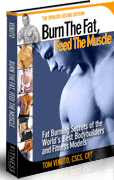
Tom Venuto is a personal trainer & bodybuilder, one of the very few who has never used drugs or steroids in his pursuit of the physique necessary to compete in the bodybuilding world. He spent a number of years when he was younger trying various diet programs & reading just about every book on nutrition that he could get hold of. His book is essentially a distillation of all of that, with on top of it some of the accumulated experience of himself & other bodybuilders who might well in fact have the biggest accumulated knowledge of how to lose fat (not just weight, but fat weight) without losing lean muscle mass. Basically, he has compiled information that is available out in the big wide world, but has filtered all the innacuracies & b.s. out so that you don’t have to.

Though he’s a bodybuilder, you needn’t be a bodybuilder to follow his program: the program is, rather, for anyone who wants to lose fat. He estimates based on his customer database that over 60% of his customers are women.

The title Burn the Fat, Feed the Muscle reflects Venuto’s overall philosophy of losing fat weight: rather than trying to starve the fat through overdoing calorie reduction in your diet, he recommends burning it off through exercise. Actually, there are four fundamental components to his program: attitude, good nutrition, aerobic exercise for reduction of body fat, & (anaerobic) strength training for building up lean muscle mass (which will also result in speeding up your metabolism so that it will burn more fat even when you’re at rest).

There’s plenty of room for customizing the program according to the specific results you want. That also includes customizing the ratios of the macronutrients — carbohydrates, protein, fats — in your diet. I.e., this is not “one size fits all.”

Although aerobic & strength training exercise are fundamental to this program, the bulk of the very bulky book (over 300 8-1/2 by 11 pages in Acrobat .pdf format that you can read on-screen or print out for yourself) is focused on nutrition. His nutritional focus is on whole foods as opposed to refined foods & supplements (in fact, he thinks that most fitness/muscle mags are function mostly just to sell supplements) & on methods of eating which will promote loss of fat & prevent loss of lean muscle mass & in fact help promote its growth (though you’d also need to strength training to actually grow the muscle).

To this end, he recommends that you reduce calories no more than 15 to 20% of what would be needed to maintain your current weight; lower than that & the starvation response is provoked, which will lower your metabolism & make it harder to lose weight. He’s also cautions about losing weight too fast: “It’s possible to lose more than two pounds per week, but if you do, most of the additional weight will usually be water and muscle. When you lose water weight, you will gain it back immediately as soon as you re-hydrate yourself. When you lose lean body mass, your metabolic rate slows down and your body goes into ‘survival mode’…. [I]f you let your body slip into ‘starvation mode,’ you will almost always gain back the weight you lost and sometimes more. You end up with less muscle and the same amount of fat (or more) than when you started.”

Similar to advice often given to diabetics to eat more & smaller meals, he recommends 5 or 6 smaller meals per day, defining a meal as always including some starchy carbohydrate (e.g., oatmeal, whole grain bread), lean protein, & a fibrous vegetables. He explains the reasoning behind all of this, & pays attention to healthy regulation of blood sugars. (Which is not to say that this is necessarily a plan for diabetics: consult your health practitioner.)

I purchased the book last Friday, & have begun to follow the program, being sure as I do so that the carbs I choose are of the low or medium-GI variety. Too soon to tell how this regime is working in comparison to what I was doing the three weeks before — three meals/day plus healthy grazing on fruits, nuts, seeds, & fibrous veggies in between — but I’m feeling very comfortable on it, & I have lost at least one pound since starting it. (A total of 9 lbs. lost since Dec. 28.)

Your mileage may vary. Check it out for yourself.

Incidentally, purchase of the book comes with lots of extras also related to nutrition, fat loss, etc.

Posted in Fat loss, Fitness | Tagged , , , | Comments Off on Burn the Fat, Feed the Muscle

Labeling chemical food

Some talk on a list I’m on about bringing GI labeling to the U.S. Some distance away, I think, but in the meantime we have a pretty good idea of what kinds of foods are more likely to be low GI. Using a glucose meter helps.

Now, the labeling change that I’d really like to see is to put “produced with chemical additives” on non-organic foods. To me, organic should be the rule rather than the exception. But it sure helps to have a national standard for organic labeling now, at least. That took years & years & years to accomplish.

Posted in Nutrition | Tagged | Comments Off on Labeling chemical food

A GI can opener is part of of a nutritious diet

GI can openerIf you bring a can of tuna for lunch… you’d better remember to bring a can opener too.

I thought I had a GI can opener on my key ring, but I didn’t. Luckily, one of my coworkers did. Thank you!

Posted in Nutrition | Tagged | Comments Off on A GI can opener is part of of a nutritious diet

The World's Healthiest Foods

The World’s Healthiest Foods website is run by a non-profit called the George Mateljan Foundation for the World’s Healthiest Foods, which “was established by George Mateljan to discover, develop and share scientifically proven information about the benefits of healthy eating, and to provide the personalized support individuals need to make eating The World’s Healthiest Foods enjoyable, easy, quick and affordable.”

The website is pretty extensive, with lots of resources. In the Eating Healthy section, The World’s Healthiest Foods List, A-Z includes about 100 foods based on their nutrient density, wholeness, familiarity & widespread availablilty, affordabilty, & tastiness. The foods chosen are listed by categories — vegetables, root vegetables, fish & seafood, fruits, low fat dairy, beans & legumes, poultry & lean meats, nuts & seeds, grains, spices & herbs, natural sweeteners, & “other” (which includes green tea & soy sauce). Each food is dicussed in detail, including its nutritional profile, health benefits (very detailed), a description of the food, its history, how to select and store it, how to enjoy it (e.g., preparation tips, serving ideas), its safety, & references.

That’s only one part of the site. Also under the Eating Healthy section are resources about organic foods & U.S. standards for labeling them; a “Food Advisor” to help people determine what types of foods they might need to add to their diets; and a place to ask questions about foods & nutrition — this week’s question is about whether dairy foods are necessary to prevent osteoporosis. There’s also a resource on essential nutrients that can only be found in the diet, like vitamins & minerals, with detailed discussion: description of the nutrient, its function, deficiency symptoms, toxicity symptoms, cooking, storage and processing of foods containing the nutrient, factors that affect its function, drug-nutrient interactions, nutrient interactions, health conditions, supplements, food sources, public recommendations, and references. As an example, here’s the page for chromium — which most of us with blood glucose regulation should be getting. Glad to know that all this chromium-rich onion I’m eating is helping me reverse my insulin resistance!

The Cooking Healthy section includes over 100 recipes, a recipe assistant to help find a good recipe based on what foods you have available or nutrients you’d like to include, a virtual cooking school to demonstrate healthy cooking techniques, & an information resource about seasonal cooking.

The Feeling Great section includes a menu planning guide & a group of articles called “How Foods Help You Stay Healthy” describing in detail with text, graphics, & animation the workings of cells, digestion, & food sensitivities; also, an article on the glycemic index. There are also articles on 12 popular diets, & a resource on “Eating Right for Your Disease.”

Besides all that, the site is updated every week with a new Recipe of the Week (this week’s offering is vegetable-rich “zesty Mexican soup”) & a Food of the Week (this week: collard greens). You can also sign up for a weekly newsletter, to have the food of the week & recipe of the week emailed to you. Also, if you visit the site, you can take them up on their pre-publication offer to get 20% off plus free shipping for the book The World’s Healthiest Foods: Essential Guide to Your Healthier Way of Eating, due for publication in March. (But they’re not set up yet for international shipping.) The book is over 800 pages including 300+ color photos, includes over 800 tips & recipes not on the website, & has seven-minute recipes for 95% of the foods. You can preview a few pages on-site. Check out the sample page with the 5-minute recipe for steamed broccoli — besides the basic recipe, there are also 8 “flavor tips” to add extra flavor & nutrition to the recipe. Pretty cool.

Posted in Nutrition | Tagged , | Comments Off on The World's Healthiest Foods