Carbs need company

One of the most important lessons for me just came recently: a lot of the books on low glycemic eating will tell about planning a meal that’s low GI, & include sample menus that include other foods (proteins, fats), but seldom do they come right outright & explain: always have your carbs with proteins and/or fats. (Lean proteins & the good fats, of course.) The exception might be having an apple or orange as a midafternoon snack… but for the starchy carbs like breads, pastas, etc., never eat them unaccompanied.

Or that’s how it seems to me. I’ve been keeping my blood glucose a lot more consistent since learning to do this.

Posted in Nutrition | Tagged , , | Comments Off on Carbs need company

State of my art

I first started learning about nutrition maybe twenty years ago when I first started doing much cooking for myself, from Laurel’s Kitchen & Diet for a Small Planet. I’m not & never have been a vegetarian, but I like a lot of what I’ve learned from vegetarian cooking. I had met up with hummus & tabouli when I was in college, & those are still two of my favorite foods.

Then perhaps a decade ago from a book by Dr. Nathan Bland, Your Health Under Siege, which debunked a lot of the fad food advice, for example the idea that eggs were unhealthy because of cholesterol in the yolk. Bland pointed out that most cholesterol is manufactured within the body, & what makes a difference to our cholesterol levels has far more to do with what kind of fats we’re eating — saturated vs. mono or poly-unsaturated. Then some other book I can’t remember that gave me important advice I’ve never forgotten: shop on the periphery of the store & stay out of the central aisles that are full of overpackaged, over-refined prepared foods. Since then, my partner has been a long-time advocate of organic & whole foods, & I’ve learned a lot from her too or from books she’s brought to my attention, such as Nourishing Traditions, which has given me an appreciation for raw, unpasteurized foods: pasteurization removes a lot of the enzymes that help us digest those very foods, & there are some indications that this may be behind the increasing incidence of lactose intolerance.

In any case, my downfall has been in lack of knowledge so much as it’s been in acting on what I know. But of course, with a diagnosis of prediabetes, there’s a lot more to learn, so that’s where How to Prevent & Treat Diabetes with Natural Medicine, the various GI books, & various books that people have told me about that I have yet to read — D’Adamo, Perricone, Bernstein, etc. — come in.

My approach is to go with what I already know I can comfortably & healthily eat, & (permanently) substituting healthy alternatives for those things that I know are bad news. For me, high protein/low carb would be like a complete tossing out of my old “normal” diet, both baby & bathwater. I prefer to change the bathwater, but keep the substantial portion of my diet that does work healthily for me, & use that as the foundation from which to add on the other stuff. If I already ate a very high protein diet, that would be different, because that’s what my body would be accustomed too; but as it is, to switch to high protein/low carb would be pretty stressful to a body that’s accustomed to getting the opposite emphasis.

I also think that since so much animal protein comes packaged with fat, & it’s not always easy to separate them, the high protein/low carb approach would be a problem for me from the get-go. I have had long-term problems with heartburn/acid reflux, & too much fat exacerbates it. I’ve had periods when four or five nights of the week I’d be waking up in the middle of the night having to take something to calm down the acid — which amounts to abuse of antacids. When I went down to Spokane in December after my mom’s death, every night but one of the nine I was there I had to take Alka Seltzer. But since making these dietary changes, my acid problem has been almost completely absent, including on my second trip to Spokane earlier this month. (I had already found that a stir fry in a wok never once would give me acid stomach, no matter how late I eat.) I have gall bladder issues as well, having had some gall bladder attacks after ingesting too many fats. I don’t particularly want to lose my gall bladder because that can lead to other consequences; the answer is to control how much & what kind of fats I ingest, which I feel I can do more easily with carbs as the highest proportion of food in my diet, & proteins & fats a bit lower.

I gave up pizza a couple of years ago because over the last few years, without exception, whenever I ate pizza (which I loved!) I would get heartburn/acid stomach. Same with any bread with raisins in it. Same with popcorn with added butter — I find hot air popcorn with nothing added to be completely wonderful, & I’ve been eating it that way for years. This is just an extension of giving up the foods that mess with me, & eating healthy foods instead. Most of which I like to begin with.

Last night’s dinner was a stir fry (in a wok) using sesame oil of garlic, green onion, collard greens, shitake mushrooms, black bean sauce, & skinless chicken breast with sobe noodles, which are made with buckwheat. (Leftovers for today’s lunch.) Breakfast this morning was a satsuma (small orange-like fruit) & half a piece of Bavarian whole rye toast with sesame tahini, cinnamon, & lox (wild salmon). I feel like I’m eating better than ever.


Posted in Nutrition | Tagged , , | Comments Off on State of my art

More on low-carb

Over the past few days as I’ve read & researched more, & also engaged in discussion on a couple of email lists, it’s become quite clear to me that there’s a vast difference between the health results in various low-carb diets, or in what individuals are doing with them. And I’m planning to learn more about this.

At this point, I am still more interested, for myself, not in a “high” protein diet but in a “higher” protein diet — changing my ratio from more or less 50% carb/20% protein to 40%/30%, with the other 30% taken up by as-healthy-as-possible fats. But even if I never make a choice for low carb/high protein myself, I do want to learn more about it not only for my own knowledge, but also so that I can be well-informed in talking with other people about that kind of diet.

This might just be a case of what fits one person might not fit another. But I think I and some of my correspondents are pretty well agreed about the importance of choosing good quality carbs, good quality proteins, good quality fats no matter what proportions one eats them in. Given other differences between my & my correspondents — whether one is diabetic or not, or other health issues, or even just things having to do with self-knowledge or different food preferences — we are going to be led to make different dietary choices.

One of the concerns I have with the “insulin-resistance” diet I mentioned yesterday, which goes by the carb-protein linking idea (eat 7 grams of protein with every 14 grams of carbs, based on reader comments at Amazon), is that it doesn’t seem to distinguish very strongly if at all between refined fast foods & organic & whole foods. But even with the diet author’s failure to do make that distinguishment, I still can, & will.

I am satisfied to lose weight at a slow rate through a diet that I think I can retain indefinitely (i.e., the rest of my life), which I don’t think I could do with a low carb diet, just because I have never been by preference a big meat eater. There are in fact some times of my life where I might have practically been a vegetarian by default, simply becuase of how little meat I ate. But I do like chicken a lot, & I enjoy turkey, the occasional beef steak, bison meat (much more tender than beef, in my experience)…

Oh, and fish! Salmon, sometimes halibut. And kippers has long been one of my favorite snacks. How lucky for me that they have all those nice Omega-3 fatty acids too!

Posted in Terveys | Tagged | Comments Off on More on low-carb

Low-carb?

I’m on low GI but not low carb. My sister got pretty sick from the Atkins diet & is only now recovering from it with the help of a nutritionally conscious acupuncturist. I was made to go on the Atkins diet on its first faddish go-’round in the early ’70s, when I was in junior high/high school. I hated that diet (& I cheated on it constantly), nor do I believe it to be healthy, & I have tended to distrust most program diets. When I’ve actually paid attention to health, I’ve just tried to follow good sense & intelligent nutrition, with an emphasis on natural foods.

Despite my wariness of low carb, I have been moving myself to a slightly lower carb/higher protein ratio than before (to a ratio of about 40% carb / 30% protein / 30% fat), & with a lot of those carbs in the form of dietary fiber. While scanning Amazon, I came across The Insulin-Resistance Diet : How to Turn Off Your Body’s Fat-Making Machine by Cheryle R. Hart M.D. & Mary Kay Grossman, which recommends “linking” by matching every 14 grams of carb in a given meal with at least 7 grams protein in the same meal. Reader reviews are mostly very positive, with a lot of lost weight & improved sugar levels reported. I’ve gotten the impression this diet was pretty permissive in terms of quality of carbs (e.g., fast foods, refined foods), but it wouldn’t seem like any great stretch to adapt the “linking” approach to low-GI eating. Especially as it’s what I seem to have been steering myself toward anyway.

Posted in Insulin resistance | Tagged | Comments Off on Low-carb?

Tracking the loss

I’ve been for the time being using a food diary program on my Palm handheld computer (Diet & Exercise Assistant, by Keyoe, Inc.) to keep track food intake & exercise, & use this info in conjunction with the glucose monitor to learn which carbohydrates are problematic for me. It ain’t perfect, but the food diary serves to help me be more mindful of portion sizes & also how much to eat for my activity levels so I can still lose weight. It also helps me to balance carbs against fats against proteins, & to know how much fiber I’m getting. Once I really get this way of eating integrated into my life, I may not need it any more, but for now it’s sure a help.

Exercise really needs to be part of the weight loss thing too. I’ve been spending a minimum of a half-hour daily plugging myself into my iPod & dancing (& I used pretty fast songs — I almost always break a sweat), but last night found I went just a bit over my “calorie budget” so did another half hour of dancing a couple of hours before bedtime. Which I think may have contributed to pretty good post-meal blood glucose & good fasting levels this morning as well. And I take the stairs to my office on the third floor now instead of using the elevator.

I seem to have lost about 5 lbs. since the start of the year. I think I would have lost more were it not for a recent trip to Spokane & Seattle to visit family — for the most part I was eating low GI, but there were a few meals I had less control over.

Yesterday I ran across a message in the Files for the LowGlycemicEating list (and now I’ve found a copy on the open Web too so I can link it here) called “Stalls — Why the Scales Can Lie” about stalls & plateaus in weight loss. It focused on low carb diets like Atkins, but I found it very encouraging nonetheless, & it has great info on how & why body weight fluctuates during the day & how plateaus or stalls don’t necessarily mean that you’re not losing the fat.

Posted in Fat loss, Nutrition | Tagged | Comments Off on Tracking the loss

Learning what works

The glycemic index hasn’t yet been embraced in the U.S., at least not by a lot of the big agencies that are major opinion leaders in matters dietary — such as the American Diabetes Association, which has at times given a nod to the importance of GI, but doesn’t seem to include any info at all about it in its educational materials. And there is very little methodical GI testing in the U.S., such as is done Australia by the University of Sydney & in Canada by the University of Toronto. It’s one of those areas in which we Americans are lagging far behind. I don’t know how much of this is just politics, or entrenched attitudes, or what, but I was damn sickened when my friend S, recently diagnosed with diabetes, was told in a diabetes class at Providence Hospital here in Anchorage that “it’s the quantity of carbohydrates that counts, but don’t worry about the type or source of your carbs.”

I’ve been telling her different, thanks to my own reading about G.I. I would reckon that in the U.S., education about GI & GL is going to come mainly in the form of people like us finding it works, sharing what we learn with those we care about (I’ve been passing my books around to several different friends), telling our health care providers & getting them to learn about it, & pressuring the market to change.

Meantime, a lot of American packaged foods, including breads, simply haven’t been tested. Naturally the University of Sydney is going to focus first on testing those foods which the Australian populace is eating, rather than testing foods from the U.S. that few Australians eat. So, again, we have to use our own common sense. The Low Glycemic Eating Guide that one can get from the Yahoo group of that name is a good common sense guide (thank you to those who created it!), & the various books also give a good idea of which raw foods are low GI & which are high.

So far, as I learn my way about this way of eating, I’ve been trying to go by the general guidelines about what foods are low or high GI, & supplement it by using a glucose meter to check on the effects that various foods have on me. I’m learning that with more starchy foods, even those that are low or medium GI like basmati rice, oatmeal, & pastas that my servings need to be smaller than what I am used to, because my (old) normal serving sizes make the glycemic load too high. I want to do a little experimentation using the glucose meter to see what adding a little vinegar or lemon juice to certain meals can do for my post-meal blood glucose, as I’ve heard acidic foods slow down stomach empyting, & other tricks like that to keep my blood sugars stable. My goal is not only to prevent myself from getting diabetes but to remove myself from the prediabetic category altogether, through low GI eating, overall healthy dieting, & weight loss.

Posted in Terveys | Tagged | Comments Off on Learning what works

Rye bread

Since beginning to eat a low-GI diet, I have been using (organic) Bavarian whole grain bread, which is imported from Weissenstadt, Germany from a company called Heinrich Leupoldts KG (also does business as PEMA). We buy it from our local natural foods store (the Natural Pantry).

The pumpernickel slice I had today has only four ingredients: whole rye, mountain spring water, sea salt, and yeast, with the following nutritional facts:

Serving size: 1 slice
Calories: 85, of which 5 are fat calories
Total fat: 0.5g (none saturated)
Cholesterol: 0mg
Sodium: 200mg
Total carb: 18g (4g fiber, 2g sugars)
Protein: 2.5g

It’s an extremely dense, flavorful, and chewy bread — very satisfying: I don’t need more than one slice. This morning I had it with about a tbsp. of tahini (sesame butter) & a tsp. or so of cinnamon. Your mileage may vary, but it has worked okay for me blood-sugar-wise; & I also feel it has a lot of nutritive value. “We use specially designed ovens to allow for a slow baking process at relatively low temperatures. This method ensures preservation of important nutrients. It also increases the glutinosity of the starch, which, in turn, enhances the bread’s digestive properties.”

I was curious about rye’s nutritional properties, and found it written up at a The Word’s Healthiest Foods:

Of particular interest to people like me with diabetes-related concerns:

Rye bread may be a better choice than wheat bread for persons with diabetes. A study published in the November 2003 issue of the American Journal of Clinical Nutrition found that bread made from wheat triggers a greater insulin response than rye bread does. Finnish researchers at the University of Kupio [sic: it’s actually Kuopio] compared the effects of eating refined wheat bread with endosperm rye bread, traditional rye bread and high fiber rye bread on several markers of blood sugar control including plasma glucose, insulin, glucose-dependent insulinotropic polypeptide (GIP), glucagon-like peptide 1 (GLP1), and serum C-peptide in 19 healthy post-menopausal women. (GIP and GLP1 are incretin hormones secreted within the gastrointestinal tract during meals that boost the effects of insulin; c-peptide is a marker of insulin secretion) All of these markers were evaluated in blood samples taken both before and after the women ate each of the breads. Results showed that after the women had eaten any of the rye breads, their insulin, GIP and C-peptide responses were significantly lower than after they ate wheat bread. Among the different rye breads, however, no significant differences were seen in insulin and C-peptide response despite their varying levels of fiber. Researchers felt this lower after-meal insulin response could, therefore, not be attributed only to the fiber content of the rye breads, but was also due to the fact that the starch granules in rye bread form a less porous and mechanically firmer matrix than in wheat bread. This would translate into a much greater particle size being swallowed when rye bread is eaten compared to wheat, which would slow the rate at which the starch could be digested into sugar.

Notice that the Kuopio study was looking at refined wheat bread rather than whole wheat, which I would reckon would make a difference. Some of the rye breads were pretty low fiber too, but they had about the same beneficial effects as the high-fiber ryes.

All the better that this Bavarian bread is 100% organic. In choosing foods, it’s been important to me not only that the food satisfies my nutritional requirements but also that it be as whole & natural as possible. So, for example, I avoid eggs produced in factory farms that imprison chickens in cages 24/7 in favor of those produces by free-range chickens, & try to buy organic fruits, vegetables, grains, etc. as much as possible instead of anything that is prepackaged (no matter how “healthy” its packaging proclaims it to be) or which has been grown with pesticides & other stuff that makes food less healthy. We are trying to hook up w/ local farmers that we might be able to purchase raw milk from, as we believe that pasteurization kills a lot of the good enzymes & other healthy stuff that comes in raw products. I do eat a few prepackaged foods, mostly soups, but far less than I used to.

Posted in Insulin resistance, Nutrition | Tagged , , , | Comments Off on Rye bread

Weather changes


Through a bus window on a rainy day. Seattle, Washington, 21 Jan 2006.

Just returned from a trip to the Lower 48. We spent several days visiting my dad & sister in Spokane. This was the trip we’d planned to have happen in late December, before my mom’s death led to my having to fly down last month. I’m really glad that all of us (me, Rozz, & Jesse) could go this time. After Spokane, we spent another few days in Seattle staying with my aunt, & also seeing my best friend Lori & her partner.

We also saw a lot of rain. And the Space Needle, which has been something of a matter of family myth since Jesse first came to live with us 9 years ago, when he was just 9. We probably still have, somewhere around, a crummy drawing we did years ago of the Space Needle as I saw it once when I lived in Seattle around Halloween, with a big King Kong figure on it. Then between the three of us we added in the monorail, a stick figure of me hanging from the train, Jesse hanging off my ankle, & Rozz & her dog Whylie making tracks in some glacier on Mount Rainier.

Jesse’s wanted to see the Space Needle ever since. Finally he got to. We went to Seattle Center on our last day & spent a couple of hours up on the observation deck. A few other pics are in the Seattle set in my Flickr photostream.

It’s not quite as rainy up here. More like snow.

Posted in Itse | Tagged , , , | Comments Off on Weather changes

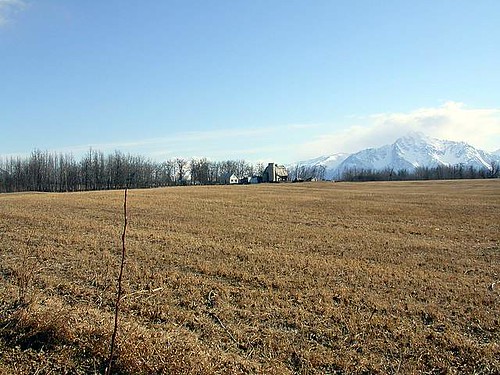
Matanuska Valley farm and Pioneer Peak


North of Palmer, Matanuska-Susitna Borough, Alaska. 5 Apr 2003.

A couple of years ago, my friend Chris & I went on a photo safari along in the Mat-Su one fine April day. What could be more cool breezier than that?

Posted in Eyes Remain Open | Tagged | Comments Off on Matanuska Valley farm and Pioneer Peak

Cinnamon & spice & everything nice

Cinnamon186. 101 mg/dL.

Well, the BG ain’t as good as yesterday morning, but it’s not like everything’s gonna change in a couple of days. Weight is actually hovering, wanting to go down to 185, but not quite.

And another mouthful of cinnamon.

Really, that’s the way I’m taking it: spoon up a teaspoonful, pop it in my mouth, & then wash it down with water. Leaves some tingle on the tongue, but not bad. Not bad at all. Better, certainly, than mixing it with the psyllium husk in water that I take to add more fiber to my diet. Psyllium husk, that’s the same stuff in Metamucil, except without the added sugar/flavoring. I like it just fine without additional flavoring — including cinnamon. In fact, really bad with cinnamon. And cinnamon really bad with psyllium husk. Cinnamon better alone. Psyllium husk better alone. Really. Well, both with water, actually, otherwise you couldn’t get it down. But not with each other.

Plantain from a producer of psyllium in IndiaI first took psyllium husk several years ago, on my naturopath’s advice when she first diagnosed me as prediabetic. You know — backwhen, when my measures were half-hearted. But I grew to like psyllium husk. It’s the seed heads, or something, from plantain, though of which of several zillion species of plantain I don’t know — but maybe I could harvest some of my own this summer. The stuff I get comes packaged as “colon cleanser,” but psyllium husk is all it is: very dry, until you add about six ounces of water (per heaping teaspoon of the dry stuff), & then as it bloats up with the water, it gets nice & fat & gel-like: the texture of tapioca without tapioca’s high glycemic index. Good soluble fiber, minimal if any calories. And actually refreshing. I like it.

Posted in Insulin resistance, Nutrition | Tagged , | Comments Off on Cinnamon & spice & everything nice